
Table of Contents (30)
“Pick Maelle or Verso.” I Knew Instantly This Game Wasn’t Playing Fair
When Clair Obscur: Expedition 33 threw that final prompt at me – fight as Maelle or fight as Verso – I froze. Not in the “which cutscene looks cooler” way, but in the “this is clearly a philosophy exam in disguise” way. I’d spent hours in this painted world, getting attached to these people and the Canvas itself, and suddenly the game boiled everything down to one irreversible choice.
If you’re here, you probably feel the same thing I did: this isn’t just about seeing two different endings. It’s about deciding what you think grief, escapism, and “moving on” actually mean – and then watching the game judge you for it. The wild part is that the story quietly favors one answer, while the mechanics reward the other.
So I’m going to do two things here: give you a practical, spoiler-heavy guide to how to get both endings with smart saves, and then be totally honest about what each ending is really saying – and why I think one of them is emotionally brutal in exactly the right way.
Spoiler Warning
This article contains full spoilers for both endings of Clair Obscur: Expedition 33. I’ll mark the structural/“how to” parts clearly, but if you haven’t finished the game once, I strongly recommend doing that before reading the story breakdowns.
Key Takeaways: Expedition 33 Endings at a Glance
- There are only two endings – one for Maelle and one for Verso. No secret third route, no New Game+ twist that changes the finale.
- Your ending is decided by a single, final choice: who you choose to control in the last fight. That’s the real point of no return.
- Maelle’s Ending preserves the Canvas, restores your companions, and unlocks Civilian Outfits for Lune and Sciel – easily the better mechanical rewards, but philosophically rooted in escapism and denial.
- Verso’s Ending destroys the Canvas, breaks the Dessendre family’s cycle of grief, and unlocks the Renoir set – fewer tangible rewards, but framed as the emotionally honest, “true” resolution.
- The game is very clear: there is no canon “good” or “bad” ending. But the way it presents and rewards each path is deliberately contradictory, and that tension is the entire point.
Why This Ending Choice Hit Me So Hard
I’ve got a soft spot for RPGs that weaponize their endings. I grew up on games that guilt-trip you for taking the “selfish” route, hand you a miserable cutscene, and then quietly dare you to do better. Expedition 33 is more insidious than that. It tells you, outright, that there are no good or bad endings – that it’s all about your values – and then stacks the deck in a way that makes you question what those values actually are.
The first time, I went with my gut and chose Maelle. I wanted my companions alive. I wanted the Canvas to survive because, honestly, I didn’t want all those hours I’d spent in that world to be for nothing. Then, when the credits rolled, I sat there feeling <emdeeply< em> wrong about it – like I’d chosen comfort over honesty. Running Verso’s ending afterward felt less rewarding in terms of loot, but emotionally, it clicked everything into place.
That’s the lens I’m coming from: I care less about cosmetics and more about what the story is actually saying about grief and letting go. So I’m going to be blunt where the game is coy.
How Endings Work in Expedition 33 (And When You Must Save)
Let’s get the practical stuff out of the way, because the game does not hold your hand here.
The True Point of No Return
The crucial moment is simple but easy to blow past if you’re not prepared:
- You play normally up to the final confrontation, where the narrative sets up Maelle and Verso for the last battle.
- Right before the climactic fight, you’re asked to choose who you’ll control: Maelle or Verso.
- That choice alone determines the ending. There is no hidden morality system, no branching flags you’ve missed, no late-game sidequest that secretly flips the outcome.
Once you confirm that choice and go into the fight, you are locked into that character’s ending. Your only way to see the other one in the same playthrough is to reload a manual save from before that decision.
Exactly When to Save If You Want Both Endings
- Before you enter the final area / start the last sequence, create a fresh manual save. Don’t rely on autosave; make something clearly labeled like “Pre-final choice”.
- Proceed to the final battle prompt.
- For your first run, pick the ending you feel most drawn to (I’ll help you decide below).
- Finish the game, watch the ending, collect your rewards.
- Then reload that manual save and choose the opposite character for the fight to see the other ending.
There’s no New Game+ that lets you import progress and make a different final choice, and no secret third ending hiding behind collectibles or perfect runs. It’s just those two routes, tied to that one decision.
Maelle’s Ending – The Seductive, Escapist Ending With the Best Rewards
How to Get Maelle’s Ending
- At the final confrontation, when the game asks who you’ll fight as, choose Maelle.
- Defeat Verso in the last battle.
- Watch the resulting cutscenes – you’re now locked into Maelle’s Ending.
What Actually Happens in Maelle’s Ending
Maelle wins. The Canvas – this beautiful, painted world where she feels whole – is preserved. The companions you’ve lost are restored. You get that warm, bittersweet RPG closure where everyone you cared about is together again, and for a moment, it feels like you made the “kind” choice.
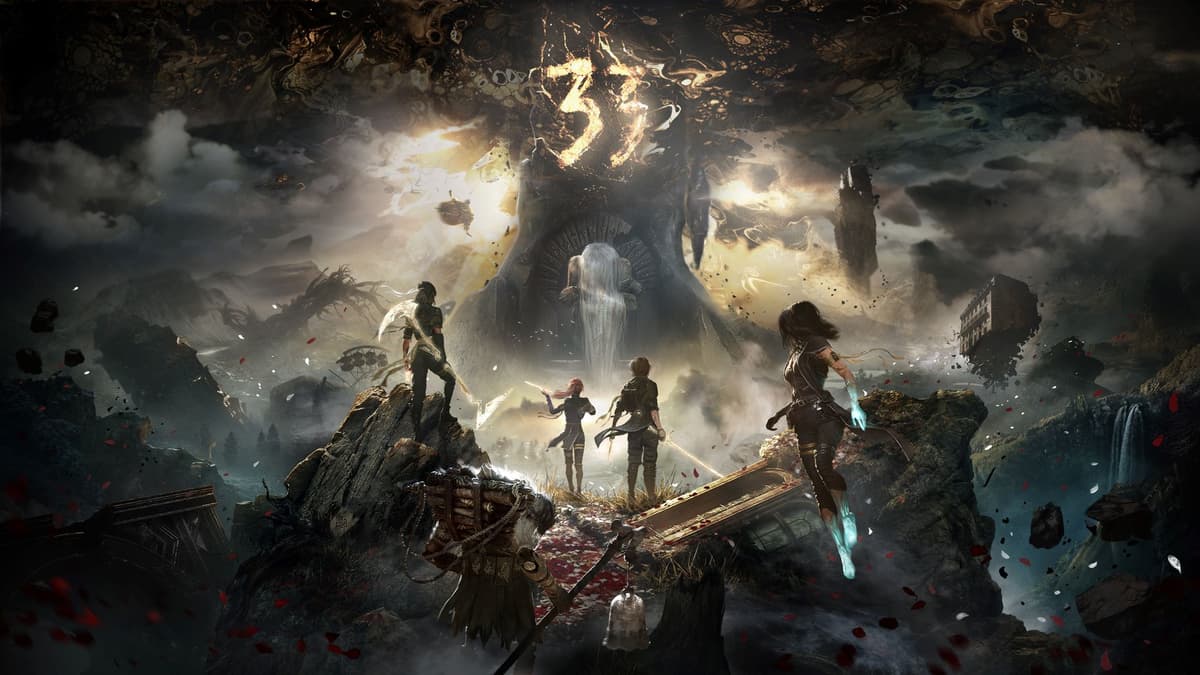
But the camera and tone won’t let you just bask in that. The ending leans into how artificial the Canvas really is. We’re reminded that this painted reality is a construct tied to Alicia, the real-world girl whose grief created and sustains it. Maelle’s choice effectively says:
- “I would rather live in this constructed world where I’m complete…”
- “…even if that means Alicia stays fused to an illusion instead of facing her loss.”
The companions are back, yes – but they’re back in a world that only exists because a family never moved on. It’s comforting, generous, and deeply selfish, all at the same time.
The Rewards: Why Min-Maxers Gravitate to Maelle
Here’s where the game plays dirty in the other direction: mechanically, Maelle’s Ending is “better”.
- You unlock Civilian Outfits for Lune and Sciel, which are added to their wardrobes after the ending.
- That’s unique cosmetic content you cannot get if you only ever see Verso’s Ending.
If you care about squeezing every cosmetic drop out of a game, this ending is non‑negotiable. From a pure rewards perspective, if someone told me, “I’m only going to see one ending,” Maelle’s is the one that gives more back in terms of content.
Why Maelle’s Choice Both Works and Horrifies Me
The more I sat with this ending, the darker it felt.
By preserving the Canvas, Maelle is effectively resetting the board. A new set of Lumierians, a new cycle, a new painted existence… all still anchored to Alicia’s fragile, real-world life. Once Alicia dies, the Canvas and everything in it is gone. Some players have fairly called this out as flirting with the idea of a “second genocide”: you’ve just created more beings whose existence is contingent on a single grieving human surviving.
So yes, Maelle’s Ending is emotionally satisfying in the moment. Your friends live. The world you know survives. But scratch the surface and it feels like institutionalized denial. It’s the ending for people who can’t bear to shut the door on what they’ve lost – which is exactly why it’s powerful, and exactly why it sits in my stomach like a stone.
Verso’s Ending – Fewer Rewards, But the Only One That Truly Lets Go
How to Get Verso’s Ending
- At the same final choice, pick Verso as the character you control.
- Defeat Maelle in the last battle.
- Let the cutscenes play out – that locks you into Verso’s Ending.
What Actually Happens in Verso’s Ending
Here, Verso chooses the nuclear option: destroy the Canvas entirely.
The painted world collapses. Its people vanish. The Dessendre family’s curse, their endless dance with the Paintress and these constructed cycles of grief, is finally broken. It’s not noble in a sweeping, triumphant way; it’s intimate and ugly and final. Verso sacrifices everything – including the home we’ve just spent a whole game learning to love – so that Alicia can no longer hide behind it.
In the epilogue, we see Alicia and her family visiting Verso’s grave. Then, in a brutal touch of symmetry, her family members begin to disappear from her life, echoing the way Verso had watched allies vanish earlier in the story. It’s the game’s way of saying: grief never really stops; it just keeps changing shape.
By the end, Alicia is alone. There’s no painted world to retreat to, no canvas safety net. Just her, her loss, and the need to keep living anyway.
The Rewards: Sacrifice Baked Into the Design
Verso’s Ending is almost comically under-rewarded compared to Maelle’s, and that’s 100% intentional.

- You unlock the Renoir set for one character – and that’s it for tangible goodies.
- No extra civilian outfits for Lune and Sciel. No big haul of unlockables.
It’s like the developers are whispering: “If you’re here, you’re not here for the loot.” This ending is mechanically stingy to match its thematic core: you choose loss, and you don’t get compensated for it.
Why Verso’s Ending Feels Like the Real Closure
The game never stamps “TRUE END” on Verso’s route, but the framing is loud. It’s the ending that:
- “Brings an end to this entire conflict” instead of simply resetting it.
- Breaks the Dessendre family’s cycle of grief instead of iterating on it.
- Lets “the story conclude for everyone, whether they’re a citizen of the Canvas or a Painter from the outside.”
It’s not hopeful in the traditional sense, but it is honest. Where Maelle’s path clings to a curated, painted version of life, Verso’s acknowledges that real life is finite, messy, and full of permanent goodbyes. As someone who’s had to sit with real-world grief, this ending landed like a punch I was grateful for. It doesn’t soothe. It respects you enough not to.
So Which Ending Is “Better” – And For Whom?
The game says there are “technically no good or bad endings,” and on a philosophical level, that’s true. Both endings are tragedies, just with different casualties. But if you twist my arm, here’s how I’d break it down.
Pick Maelle’s Ending First If You’re:
- A completionist – you want the Civilian Outfits for Lune and Sciel and don’t want to miss any cosmetics.
- Emotionally attached to the party and the Canvas – you need to see a version of this story where the people you loved don’t just vanish into nothing.
- Interested in escapism as a theme – you want to sit with the uncomfortable idea that sometimes we choose illusion because it hurts less.
- Planning to see both endings anyway – getting the more “reward-rich” ending out of the way first can make Verso’s finale feel cleaner.
Pick Verso’s Ending First If You’re:
- Story-first – you care more about thematic coherence and resolution than cosmetics.
- Drawn to narratives about acceptance – you believe that facing grief head-on is better than living in a curated fantasy.
- Interested in breaking cycles – you want the ending that clearly ends the Dessendre family’s curse instead of extending it.
- Okay with tragic closure – you can live with an ending that leaves Alicia alone but free.
My personal recommendation? Do Maelle’s first, then Verso’s. Let yourself enjoy the illusion, get your unlocks, and feel the warmth of that “everyone’s back” moment. Then go back, burn it all down with Verso, and sit with what the game is actually telling you about grief and letting go. Experiencing them in that order turned Verso’s ending from sad into inevitable.
Why the Game Refuses to Give You a Clean Win
What I love most about Expedition 33 is that it refuses a neat, heroic solution. There is no path where:
- The Canvas survives forever,
- Everyone you care about lives happily, and
- The Dessendre family fully heals and moves on.
Instead, you get two mutually exclusive philosophies:
- Maelle: “Love and connection justify the illusion. If we can keep this world alive a little longer, that’s enough.”
- Verso: “Love and connection matter because they’re finite. If we don’t accept that, we’re just repeating the same pain.”
And just to make sure you actually wrestle with that, the designers cross the wires:
- The more escapist ending (Maelle) gives you better rewards.
- The more honest ending (Verso) gives you better narrative closure but fewer goodies.
This is the kind of design that sticks with me. It’s not just an A/B choice; it’s a mirror. Do you instinctively chase rewards? Do you instinctively chase “true endings”? Either way, the game makes you conscious of that instinct.
How the Community Seems to Be Splitting
From what I’ve seen, players are genuinely divided, and that division makes perfect sense.
- Verso supporters tend to praise the thematic coherence: the Canvas ending with the family’s acceptance of reality, the cycle of the Paintress finally breaking, and the emotional weight of Alicia’s loneliness as a necessary, if painful, freedom.
- Maelle defenders focus on the emotional reality of not wanting to let go. They argue that preserving the Canvas and restoring the companions is a valid, human response to catastrophic loss, even if it’s “wrong” on paper.
- And then there’s a third camp that’s just mad there isn’t a route where the Canvas and its inhabitants get to exist peacefully without the looming threat of annihilation, now or when Alicia eventually dies.
I’m sympathetic to all three groups, but I fall squarely in the Verso camp. To me, the tragedy of Maelle’s Ending is that it pretends to be merciful while quietly setting up more future suffering. Verso’s Ending, by contrast, doesn’t hide the pain. It ends the world so that a person can live.
TL;DR – How to See Everything Without Regretting Your Choice
If you’ve skimmed down here, here’s the condensed, no-fluff version from someone who’s made both choices and sat with them:
- Make a manual save right before the final choice between Maelle and Verso. That’s the only way to see both endings in one run.
- Maelle’s Ending: choose Maelle for the last fight and defeat Verso. You preserve the Canvas, restore your companions, and unlock Civilian Outfits for Lune and Sciel. It feels emotionally comforting but leans hard into escapism and denial.
- Verso’s Ending: choose Verso for the last fight and defeat Maelle. Verso destroys the Canvas, breaks the family’s cycle of grief, and Alicia is left alone to face reality. You unlock the Renoir set, and that’s basically it for rewards – but the story lands with a heavier, more satisfying thud.
- There’s no secret third ending, no New Game+, and your earlier decisions don’t unlock a hidden perfect route. The tension between narrative closure (Verso) and mechanical reward (Maelle) is the whole point.
- My honest advice: play Maelle first for the gear and the illusion, then Verso for the truth. Let the game hurt you a little. It’s one of the rare RPGs where that hurt actually means something.
In the end, Clair Obscur: Expedition 33 doesn’t ask, “Did you get the good ending?” It asks, “What did you value when it finally mattered?” And that’s a question I’ll take with me long after the Canvas is gone.
FinalBoss // Gear
Level up your setup
01Top-rated gaming headsetson Amazon→02High-refresh gaming monitorson Amazon→03Gaming chairson Amazon→04Discounted game keyson Kinguin→Affiliate links · As an Amazon Associate, FinalBoss earns from qualifying purchases.
Want to Level Up Your Gaming?
Get access to exclusive strategies, hidden tips, and pro-level insights that we don't share publicly.
Ultimate Gaming Strategy Guide + Weekly Pro Tips