
If you want a Necromancer that freezes packs solid and then deletes them with Darkness damage-over-time, you are looking for the build everyone is running off the Bloodless Scream scythe in Lord of Hatred. It is the same archetype people call the Frost Lich or Lich King Necromancer: Cold Skeletal Mages apply constant Chill, Chill stacks into Freeze, and your Darkness skills hit far harder against frozen targets. Build it like a generic pet-DPS Necro and it feels mushy. Build it around freeze uptime and you get a real endgame engine.
Table of Contents (14)
The short version
- Weapon:
Bloodless Scream, a Unique two-handed Scythe for the Necromancer. Your Darkness Skills Chill enemies (up to 40%) and deal increased damage to Frozen enemies, and they have up to a 100% Lucky Hit chance to generate extra Essence against Frozen targets. It is a random drop starting at World Tier 3+, and you can target-farm it from Echo of Varshan. - Core damage:
Blightas your ground Darkness spender — it parks Shadow DoT under a pack while your minions keep firing. - Curse:
Decrepifyfor slow and survivability.Iron Maidenis the fallback if you need more reflected pressure. - Minions: Cold Skeletal Mages for passive Chill. They are your control engine, not just damage.
- Itemize for the frozen state: damage to Chilled, damage to Frozen, Shadow/DoT, and minion attack speed beat flat additive damage.
The whole loop hangs on one idea: Freeze is your damage switch, not just a safety net. Once enemies are Chilled or Frozen, Bloodless Scream and your frozen-target multipliers turn on. Get them there fast and everything else scales with it.
Why this build works when other minion Necromancers stall out
The trap is treating the minions as pure DPS. Here, Cold Skeletal Mages are the control layer: they apply Chill passively while you handle curses, pulls, and Darkness zones. That passive Chill is what makes Freeze reliable, and Freeze is what unlocks the damage. A standard Shadow summon build has to chase that scaling manually; this one bakes it into the pets.
So you want enemies in one of three states as often as possible: Chilled, Frozen, or Staggered. On trash you get true Freeze. On bosses and freeze-resistant targets you convert the same control package into faster Stagger, then dump every DoT and cooldown during the stagger window. The freeze fantasy never fully stops mattering, it just changes shape against big targets.
The core pieces you should not cut
- Cold Skeletal Mages — your Chill-into-Freeze engine. Configure them as Cold Mages in the Book of the Dead so every volley applies Chill.
- Blight — a ground Darkness skill that keeps ticking after you cast it, so minions and DoT overlap on the same packed enemies.
- Decrepify — your curse, for slow and damage smoothing on elite packs.
- A grouping tool like
Corpse Tendrilsso Chill stacks across the whole pack at once. - Bloodless Scream or, until it drops, gear that wakes up against Chilled and Frozen enemies.
One rule beats all the others: do not swap Cold Mages for a generic damage-mage setup. The archetype lives on reliable status application, not a single fat summon spike. Faster, more frequent hits climb Chill toward Freeze, and Freeze is where your real damage lives.
Blight is the second anchor. Put sustained Shadow damage under the pack while your minions lock it down; because it is a ground effect, it rewards grouping and keeps punishing stationary enemies long after the cast. The third anchor is the curse. Decrepify slows the fight in your favor and steadies dangerous elite packs; in current Lord of Hatred Necromancer setups it is the default curse, often applied through a rune or aura rather than a manual button. Iron Maiden is a valid alternative when you want more reflected pressure.
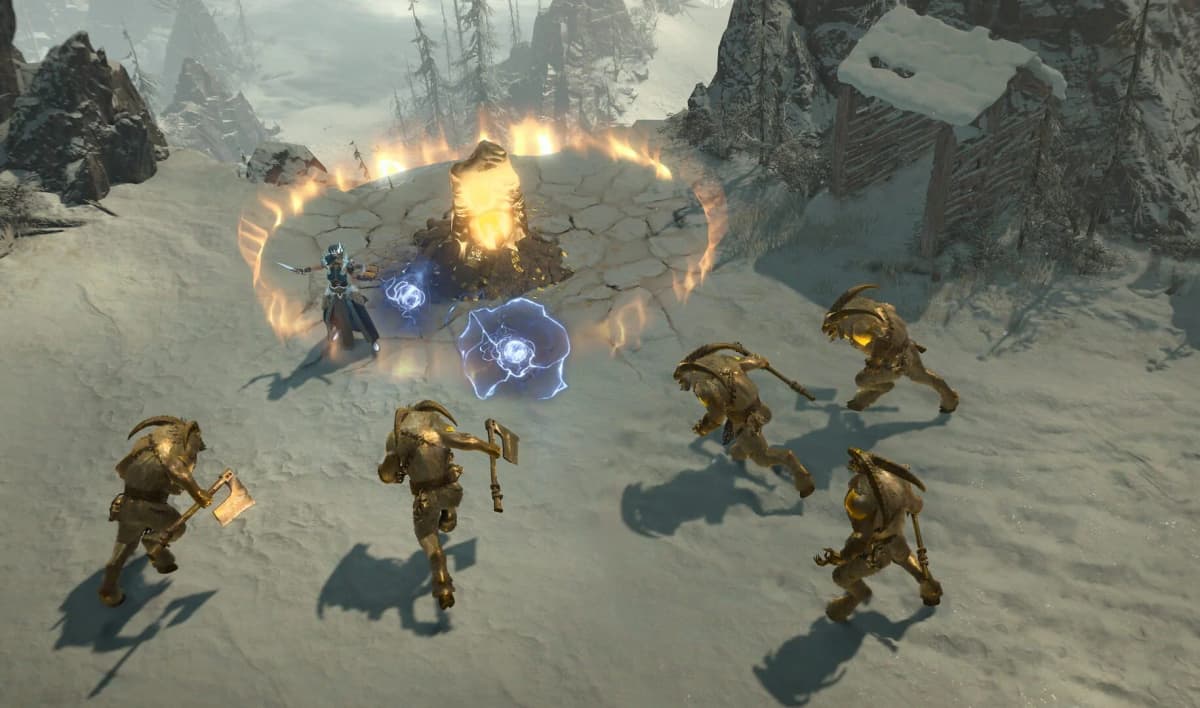
Finally, bring a pull. Corpse Tendrils does more here than another marginal damage button because clustered enemies all eat the same Chill sources and Blight ticks. The faster the whole pack reaches Freeze together, the harder Bloodless Scream pays out.
How to structure the build on your bar
A practical bar follows one pattern: a generator or utility button, your Darkness spender (Blight), a corpse-control tool, your curse (Decrepify), your summon slots, and one defensive or ultimate slot. The exact six-button layout depends on how aggressive you want to be, but the logic is stable. You are building a controlled kill zone, not racing a burst combo.
The opener on packs: curse first, pull or cluster second, drop Blight third, then let Cold Mages layer Chill until the pack freezes. If you have a corpse spender or explosion, use it after enemies are trapped, not before — early corpse consumption scatters damage, late corpse spending punishes a pack that can no longer move.
For elites, patience beats spam. This build gets punished when you scatter the fight. If an affix forces movement, reposition only enough to keep the enemy inside your minion firing lane and your Blight zone. Over-kiting is the fastest way to make the build feel weak, because it breaks the overlap between Chill and DoT.
On bosses, stop expecting Freeze and think control pressure into Stagger. Cold Mages still do useful work even when the boss never freezes — the repeated control fills the stagger bar. When stagger lands, that is your window to drop every DoT, refresh Decrepify, and fire every cooldown-based damage source at once.
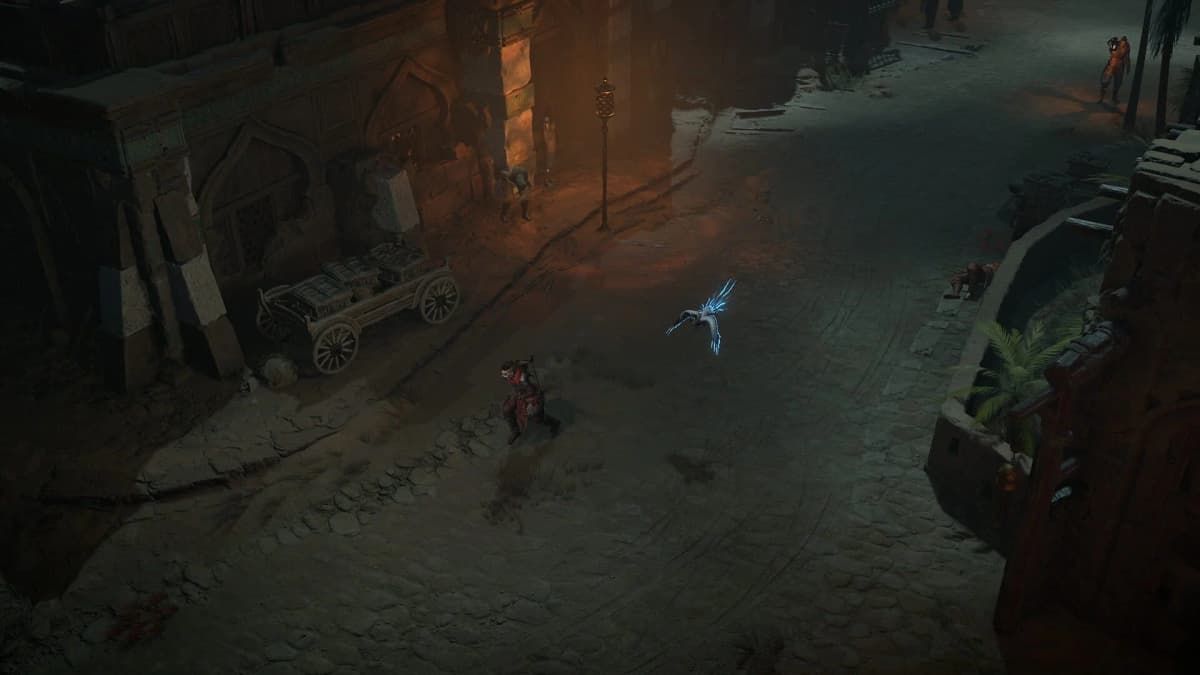
Gear priorities: chase the frozen-target multipliers
Once Chill and Freeze are reliable, your gear should cash in on those states. Prioritize damage to Chilled enemies, damage to Frozen enemies, Shadow damage-over-time, minion attack speed, and control uptime over bland additive damage rolls. Minion attack speed in particular matters more than it looks — faster Cold Mage volleys mean faster Chill, which means faster Freeze.
The signature item is Bloodless Scream, the Unique two-handed Scythe for the Necromancer. Its effect is the entire reason this build exists: your Darkness Skills Chill enemies (up to 40%) and deal increased damage to Frozen enemies, with up to a 100% Lucky Hit chance to generate additional Essence against Frozen targets. That Essence return is what lets you keep casting Blight and curses without starving. It is a random drop with a chance starting at World Tier 3+, and you can target-farm it through Echo of Varshan. Until it drops, the substitute plan is identical: stack everything that rewards Chilled, Frozen, or otherwise crowd-controlled enemies.
Lord of Hatred also gives you the Talisman system (Seals and Charms for set-style bonuses — Uniques like Bloodless Scream can even be turned into Unique Charms) and the returning Horadric Cube, which handles Transfiguration to layer extra effects onto your gear. Use those slots to reinforce the freeze identity — better status application, longer control, more Shadow/DoT pressure — rather than patching unrelated damage holes. A build that spreads its budget across mismatched damage types looks fine on paper and underperforms in high-end packs.
Survivability still matters, because standing in range long enough for Freeze to land is part of the plan. Armor, resistances, and cooldown recovery keep the build online. Dead minions, interrupted casts, and forced retreats are all indirect damage losses. If you are still gearing up and need fast endgame armor pieces while you hunt Bloodless Scream, our Chaos Armor farming guide is the quickest route to a defensive baseline.
How to play it in real combat
In normal packs, think in layers. First: apply Decrepify. Second: hold enemies together with Corpse Tendrils. Third: place Blight so enemies have to sit in it. Fourth: let Cold Mages finish the cycle into Freeze. If a pack dies before the freeze fully lands, fine. If tougher enemies survive, the frozen-target multipliers and Bloodless Scream are now doing the heavy lifting.
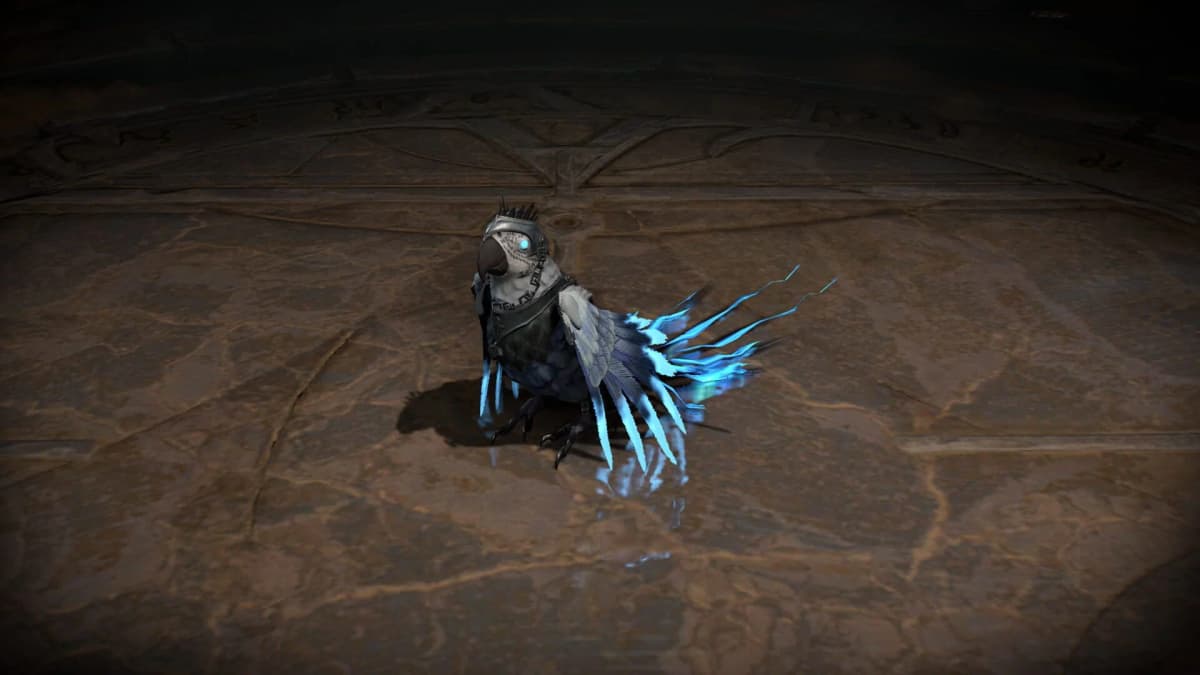
In denser content, stay methodical. Move group to group with enough overlap that your summons are always engaging the next screen, but never outrun your own setup. This build wants to establish one controlled battlefield after another, not dash ahead and wait for pets to catch up.
Against ranged enemies it feels better than expected, because Chill drags their attack pace and buys time for Blight ticks and minion volleys. Against mobile melee elites, success depends on keeping the fight compact — drag them too far and you lose Chill, Decrepify uptime, and area damage all at once.
Common mistakes
- Building for raw summon sheet damage: this archetype wins through status uptime and frozen-target multipliers, not pet numbers.
- Dropping Cold Mages for another mage variant: that tanks Freeze consistency, which tanks both safety and damage.
- Casting Blight without grouping first: spread-out packs walk out of the DoT and never freeze together.
- Ignoring boss Stagger: judging the build only by whether a boss can freeze misses half its endgame value.
- Over-kiting: every unnecessary step breaks minion focus fire and shrinks Blight uptime on target.
- Itemizing too greedily: too little survivability and you cannot hold the battlefield long enough for the control engine to spin up.
Practical takeaway
Run Cold Skeletal Mages for Chill, Blight for ground Darkness damage, and Decrepify for control, all anchored on Bloodless Scream and frozen-target scaling. If the build feels unsafe, trim a greedy damage slot before you touch the Cold Mage package — the control shell is the build. If it feels slow, raise Chill rate, minion attack speed, and grouping consistency rather than chasing a bigger nuke. Faster Freeze is a bigger real DPS gain than any single stronger skill, because every other multiplier in the build depends on enemies reaching that frozen state quickly.
FinalBoss // Gear
Level up your setup
01Top-rated gaming headsetson Amazon→02High-refresh gaming monitorson Amazon→03Gaming chairson Amazon→04Discounted game keyson Kinguin→Affiliate links · As an Amazon Associate, FinalBoss earns from qualifying purchases.
Want to Level Up Your Gaming?
Get access to exclusive strategies, hidden tips, and pro-level insights that we don't share publicly.
Ultimate Guide Strategy Guide + Weekly Pro Tips