
A Chaos Necromancer run has one moment where the screen stops feeling messy and starts feeling controlled: Shadow damage is ticking everywhere, your minions are multiplying pressure, corpses feed the loop, and elite packs melt before they pin you down. That is the appeal of the Cthulhu Whisperer build. In Diablo IV: Season of Infernal Chaos, you assemble it as a Shadow Mage Necromancer that scales summons, Shadow procs, and Chaos Perks first, then pivots around your best Chaos Armor piece.
Table of Contents (15)
The short version
- Class & identity: Shadow Mage Necromancer that keeps minions, Shadow skills, and Chaos Perks all firing at once.
- Season system to abuse: you run four Chaos Perks (three non-Unique plus one Unique) alongside Chaos Armor in five slots.
- Anchor perk: Accelerating Chaos — Lucky Hit creates Chaotic Bursts and grants cooldown reduction, and you get many Lucky Hits from minions and Shadow effects.
- Leveling order: push the seasonal questline (Blood on Parchment → Sword of Horazon → Fell Council → Bartuc) to unlock the Infernal Cage and Chaos Armor before you grind gear.
- Endgame chase: Unique Chaos Perks drop from Bartuc, Lord of Chaos, on Torment difficulties.
What the Cthulhu Whisperer build is
This is not a Blizzard preset. It is a Season 10 Necromancer setup that leans into eldritch battlefield control: Shadow Mages, layered damage over time, summon pressure, and Chaos effects that reward many hits landing at once. That last part is the whole point. A normal minion build can feel passive; this one gets much stronger when your minions, Shadow skills, and Chaos Perks all create repeated proc chances.
Season of Infernal Chaos is what makes it work. You equip four Chaos Perks total — three non-Unique slots and one Unique slot — plus Chaos Armor in five slots. Those systems reward builds that exploit upside while surviving the downside, and Necromancer is built for that: your minions keep dealing damage while you reposition, rebuild corpses, or refill Essence.
- Main identity: Shadow Mage Necromancer with active summons
- What scales it: proc density, resource flow, cooldown reduction, and summon-boosting Chaos Armor
- Best content: Chaos Rifts, Infernal Hordes, then Pit pushing
- Long-term chase: Unique Chaos Perks from Torment Bartuc, Lord of Chaos
Leveling path: unlock the season before you chase gear
Starting fresh, push the seasonal questline before grinding random events. The checkpoints run through Blood on Parchment, Sword of Horazon, the hunt for the Fell Council, and the Bartuc fight that opens the Infernal Cage and Chaos Armor access. That route unlocks the systems this build depends on. Farming ordinary gear first is fine, but it is not where the build comes alive. If you want to outlevel that grind quickly, our Infernal Chaos power-leveling guide covers the fastest early route.
Once Chaos Rifts are open, run a tight loop: clear Rifts, bank Chaos progression, and invest into your season power. The perk pool includes Necromancer-specific choices, and this is where the build separates from a plain summon setup. Stay in pre-Torment content too long chasing a perfect drop and you only slow yourself down — the season power is the point.
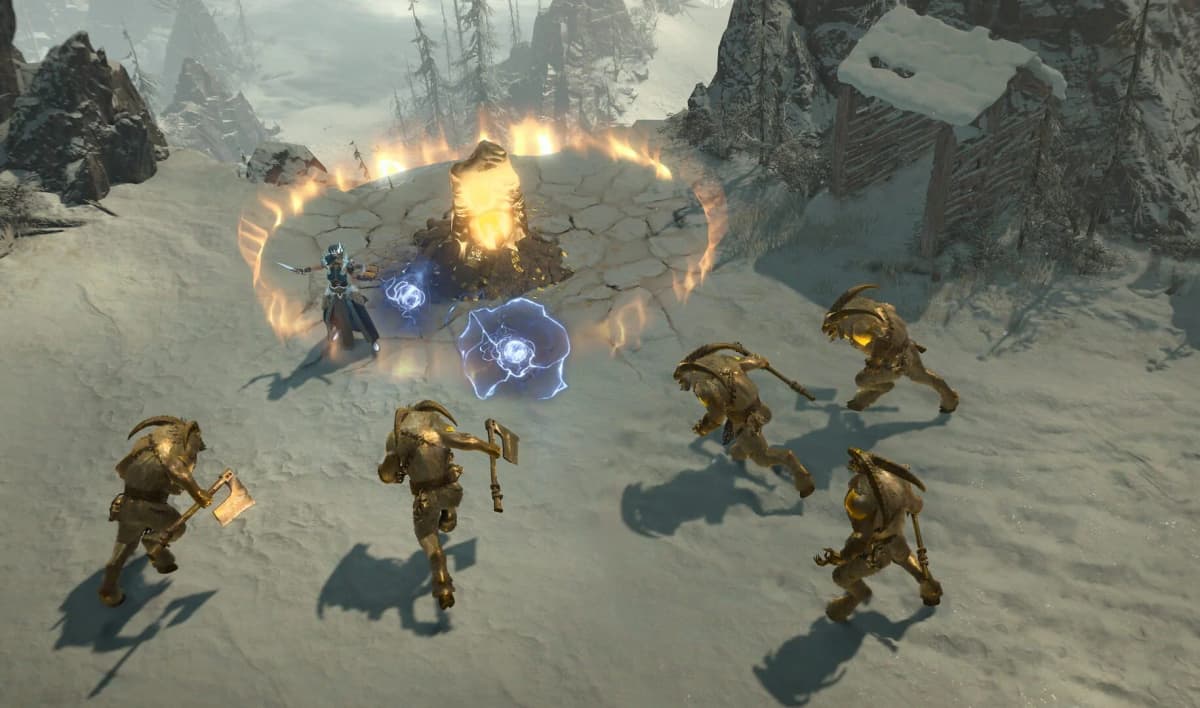
For leveling and early Torment, keep the action bar practical: one Basic Skill, one Shadow damage skill, Raise Skeleton, one corpse skill, one defensive or debuff slot, then a Golem or ultimate by preference. That gives you enough control to survive bad pulls while still scaling off your minions.
Chaos Perks: pick the engine, not the spreadsheet
You run four Chaos Perks — three from the non-Unique pool plus one Unique slot. Accelerating Chaos is the anchor: it gives Lucky Hit a chance to create Chaotic Bursts and grants cooldown reduction, and a summon-plus-Shadow build hands you Lucky Hits constantly. The general rule is the kiss-curse trade: take a perk whose downside you barely feel and whose upside feeds your engine harder. Fill the remaining two non-Unique slots with resource-positive and cooldown effects, and save the Unique slot for your highest-impact seasonal perk. For the full pool and how perks interact with War Plans, see our War Plans and best Chaos Perks guide.
- Anchor perk: Accelerating Chaos — Lucky Hit Chaotic Bursts plus cooldown reduction
- Non-Unique slots: resource generation and cooldown effects that keep you summoning and casting
- Unique slot: reserve it for your strongest seasonal effect from Torment Bartuc
Gearing: pivot around your first strong Chaos Armor piece
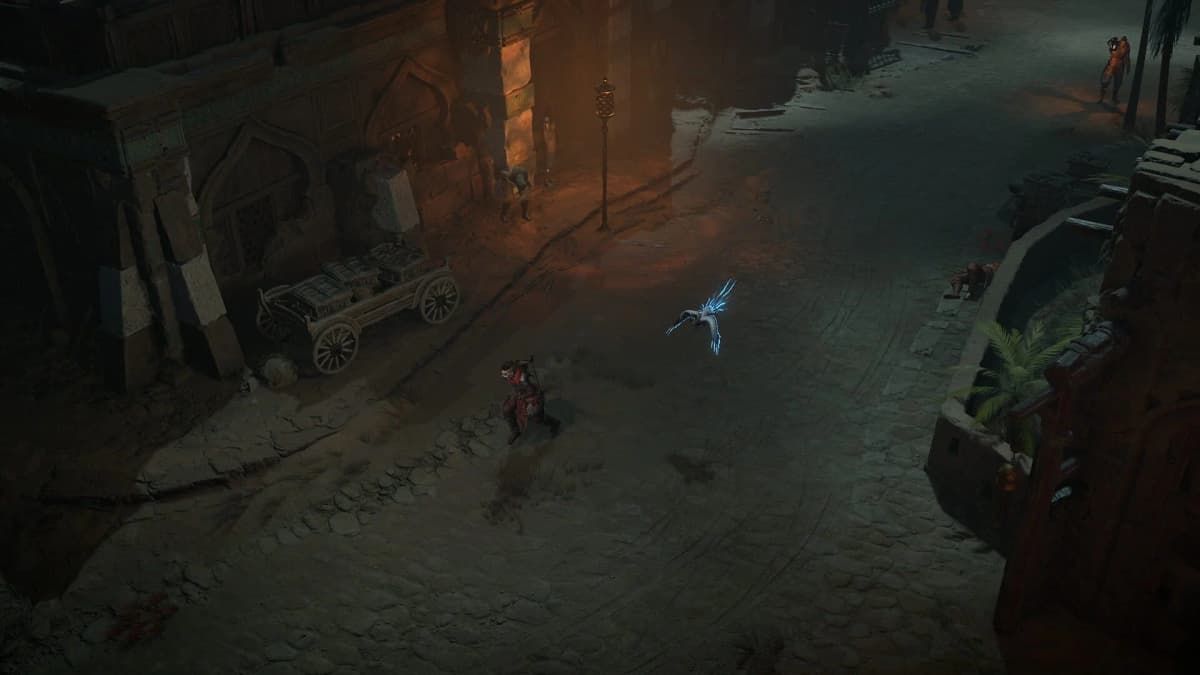
Build around what drops. If your first strong Chaos Armor piece is a helmet or chest that boosts summons, Shadow effects, or cooldown, reshape the build around it immediately — those slots move performance far more than waiting for a perfect full set. Chaos Armor is designed for mix-and-match power in Season of Infernal Chaos, not rigid set completion. Focus on the effect text, and prioritize pieces that improve summons directly, raise Shadow damage or proc chance, cut cooldown pressure, or add survivability without killing your damage loop.
- Armor priority: helmet and chest first, then whichever piece most improves Shadow Mage pressure
- Effects that matter: summon buffs, Shadow damage or proc chance, cooldown reduction, survivability
Skill priorities that actually carry
The name sounds exotic; the gameplay is grounded. First, keep your Shadow Mages active — cut the mage package too early and you lose the constant ranged pressure that defines the build. Second, make sure your bar can generate corpses and spend them well. Third, do not overload on slow, greedy casts that interrupt your repositioning.
In a pack: apply your Shadow source early, get the first corpse, control the crowd if your setup allows, maintain skeleton uptime, then weave your Basic Skill whenever Essence starts to sag. On bosses, the mistake is standing too close for too long to force damage. Let summons and Chaos effects keep pressure up while you move.
While gearing, keep a defensive slot or Golem. Once your Chaos Armor carries enough protection in endgame, that flex slot can turn aggressive. The high-end version of this build is not stronger because it presses more buttons — it is stronger because every button supports the same engine.
Best endgame farm loop
In the real farming phase the loop is simple: run Chaos Rifts for Chaos currency, push your season progression and the Viz-Jaq’taar Veneration reputation track, then rotate into Infernal Hordes and Torment Bartuc attempts. Infernal Hordes suit this build because the mode throws repeated waves, traps, rifts, and boss-rush pressure at you — exactly the environment where a summon-heavy Shadow build scales through chaos instead of being disrupted by it. For targeting specific Chaos Uniques, our Chaos Uniques farming guide breaks down the best sources.
Bartuc, Lord of Chaos, is the long-term target: Unique Chaos Perks come from his Torment difficulty versions. Do not rush him just because the reward table is attractive. If your minions die constantly, your resource loop collapses, or elite packs in Hordes already feel unstable, you are not Bartuc-ready. Clean up Rifts and Hordes, sharpen your Chaos Perks, then return when the build runs smoothly.
For wave farming, this build is excellent. For later Pit pushing or Lord of Hatred-style single-target pressure, shift one layer of the setup away from convenience and toward boss uptime — but only after the engine is proven.
Common mistakes
- Treating the Basic Skill as damage. It is your Essence fuel and proc source, not your kill button.
- Chasing names over effects. Read the affix text; that is what determines whether a piece fits the engine.
- Sacrificing Shadow Mages too early. The build’s identity is ranged minion pressure plus proc layering.
- Ignoring survivability while copying endgame setups. A dead Necromancer gets no value from great Chaos Armor.
- Waiting for perfect gear before pivoting. Season 10 rewards building around your first strong Chaos drop.
Practical takeaway
The plan is short: build a stable Shadow Mage Necromancer shell, push the seasonal questline to unlock the Infernal Cage and Chaos Armor, anchor your Chaos Perks on Accelerating Chaos, pivot around your first strong Chaos Armor piece, and farm Bartuc only once the build already carries itself. Done in that order, the Cthulhu Whisperer is one of the strongest Diablo IV: Season of Infernal Chaos Necromancer setups because the season finally lets summons, corpses, cooldowns, and Chaos procs run as one engine.
FinalBoss // Gear
Level up your setup
01Top-rated gaming headsetson Amazon→02High-refresh gaming monitorson Amazon→03Gaming chairson Amazon→04Discounted game keyson Kinguin→
Affiliate links · As an Amazon Associate, FinalBoss earns from qualifying purchases.
Want to Level Up Your Gaming?
Get access to exclusive strategies, hidden tips, and pro-level insights that we don't share publicly.
Ultimate Guide Strategy Guide + Weekly Pro Tips