
You want one Warlock setup that carries you through Season of Infernal Chaos endgame, and the answer is Apocalypse. It builds toward a single screen-clearing detonation, then turns the season’s new power systems into multipliers on top of that hit. The catch is that Apocalypse only feels like its reputation once your stack generation and survivability are online — undergeared, it is one of the most disappointing builds in the class.
Table of Contents (19)
The short version
- Class: Warlock, the class this build is for.
- Core skill: Apocalypse, played with the Annihilation upgrade so the ultimate fires off accumulated stacks instead of a flat cooldown.
- Stack builder: Infernal Breath and other Hellfire skills that hit often and keep pressure up while you move.
- Grouping: a crowd-control tool such as Umbral Chains to pull packs tight before you detonate.
- Why this season: Chaos Perks, Chaos Armor, and Chaos Rifts all stack as multipliers onto a single high-value cast — exactly what Apocalypse wants.
- Alternative: Dread Claws, a steadier summon-and-claw build, if you dislike charge-up gameplay.
Why Apocalypse fits Season of Infernal Chaos
Season of Infernal Chaos is a power-creep season by design. The whole loop hands you damage multipliers that sit on top of your existing build instead of replacing it, and Apocalypse — a build that already pays out everything on one charged cast — benefits more from that than almost any steady-damage setup.
Three seasonal systems do the lifting:
- Chaos Perks are skill-modifying effects in four rarities (Magic, Rare, Legendary, Unique). You equip three non-Unique perks plus one Unique perk, and each class has 16 perks to choose from, so you are tuning how your skills actually function, not just bolting on stats.
- Chaos Armor pieces are existing Uniques reissued as stronger counterparts for new slots. They always drop at maximum power with at least one Greater Affix and cannot appear in their original item slot, which makes them a clean way to push a build’s enabling Uniques further.
- Chaos Rifts are portals that open inside Helltides and Nightmare Dungeons. Sealing them grants seasonal reputation and Infernal Warp, the currency you spend to upgrade Chaos Perks.
Read those three together and the plan is obvious: use Chaos Rifts to fund the Perks that sharpen Apocalypse, and use Chaos Armor to slot the build’s enabling Uniques at full power.
Core build plan
1. Build around Apocalypse and the Annihilation upgrade
This is the non-negotiable core. With Annihilation, you stop playing a normal ultimate cycle — wait, press once, return to filler — and start playing a stack engine that detonates off what you have built. That single change is what gives the build its ceiling.
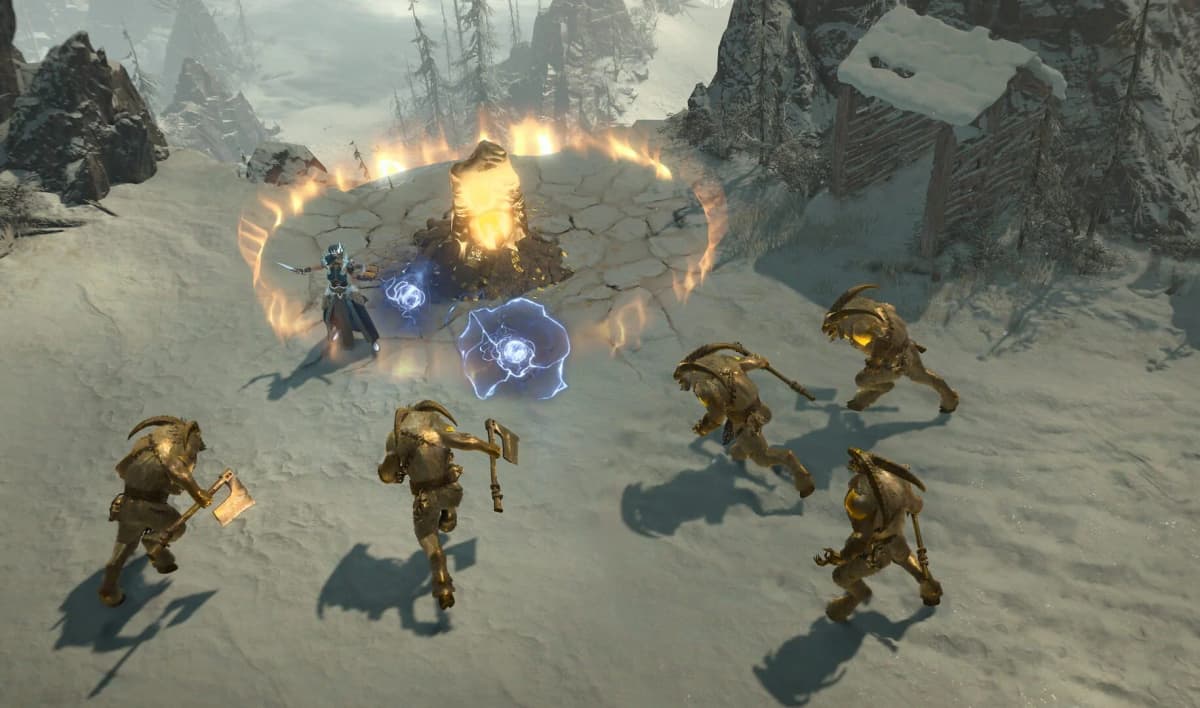
The skill expression is in when you spend. In trash content, firing early is fine; Apocalypse is just a tempo tool there. In serious content, cashing out the moment you are able is a damage leak. Build as high as the fight safely allows — on elite packs, dense waves, and boss vulnerability windows — then detonate into the pressure point. The build gets dramatically stronger the moment you stop treating every charge as “good enough.”
2. Generate stacks fast with Infernal Breath
Every strong version of Apocalypse has the same requirement: it must reach meaningful stacks quickly. Infernal Breath is the stack builder this build leans on, backed by Hellfire tools that hit often and keep pressure up while you reposition. If a supporting skill looks flashy but slows your generation, it is hurting the build — cut it.
Think of your bar in three jobs: a stack builder, a grouping tool, and a survival layer. The grouping slot is where a control skill like Umbral Chains earns its place, because Apocalypse only converts density into damage if the density is there. Pull a screen together, keep Hellfire pressure on it, and detonate into the compressed pack.
3. Prioritize the stats that smooth the engine
Apocalypse is not a build where raw sheet damage is the only number that matters — you want effects that improve the whole loop, not just the explosion. In rough priority:
- Enabling Uniques first. The build’s identity-defining items come before anything else; without them you are playing a worse skill, not a worse number.
- Ultimate and AoE scaling second. Apocalypse gets paid on the detonation, so those multipliers carry weight.
- Generation and uptime third. A clunky stack engine collapses your damage profile between casts.
- Defense to survive the charge window. The build dies during setup more than during the payoff.
Do not chase perfect tempering rolls early. Lock in functional upgrades that get you online, then gamble for ideal lines once the core is stable.
How to play it in endgame content
Helltides and Chaos Rifts
This is Apocalypse’s best environment. Density works in your favor, and the Chaos Rifts that spawn inside Helltides hand you both Infernal Warp for your Perks and bursts of temporary power. Do not snipe single enemies — pull forward, build a blob, charge while moving through it, then erase the pack and keep momentum. If a Rift modifier is dangerous and your defenses are not there yet, seal a safer one instead of forcing the biggest possible detonation every time.
Infernal Hordes and the Bartuc fight
The reworked Infernal Hordes are a natural fit. At the end of a run you are given a choice: take on the familiar Fell Council, or up the ante against Bartuc, the Lord of Chaos. Bartuc is the high-risk, high-reward loot fight — worth targeting once your build holds up, and worth skipping for the Fell Council while you are still gearing.
If you are not yet ready for full Torment-tier Hordes, run Fleeting Hordes first. That scaled version gives you four waves with limited Infernal Offerings before two Fell Council members, which is a controlled way to stabilize gear before you commit to a Bartuc run.
Bosses and Pits
Boss play is where players misread Apocalypse. It is not “walk in and delete everything” unless your gear far outscales the content. On bosses the test is recognizing when to build high and when to cash out early: save your largest detonation windows for moments you can stay on target without losing uptime to mechanics. In Pits the same rule holds — a panicked small cast is usually worse than surviving two more seconds and landing a much larger hit from a clean position.
When Dread Claws is the better pick
Dread Claws is the other Warlock build worth knowing. If you dislike charge-based gameplay, want steadier output, or do not yet have the Uniques Apocalypse needs, its summon-and-claw rhythm will feel better in your hands. It trades Apocalypse’s burst peaks for constant pressure. That does not make it the stronger overall answer, but it is often the more practical one while you build your item base.
Common mistakes
- Spending Apocalypse too early every fight. The build’s payoff is high-stack detonations, not panic-casting at the first safe moment.
- Ignoring grouping. Spread-out enemies make your best cast automatically worse — always lead with your control tool.
- Overvaluing sheet damage. Smooth generation and survival add more real damage than one greedy offensive swap.
- Forcing hard Chaos Rifts too soon. Undergeared, a bad Rift wastes more time than it saves; seal an easier one.
- Chasing best-in-slot before functional gear. “Good enough and online” beats “theoretical perfect” for most of progression.
Practical takeaway
For one all-purpose Warlock build in Season of Infernal Chaos, start with Apocalypse: Annihilation as the core, Infernal Breath for fast stacks, a grouping tool to compress packs, and enough defense to survive the charge. Fund your Chaos Perks with Infernal Warp from Chaos Rifts, slot enabling Uniques through Chaos Armor, gear up in Fleeting Hordes, then graduate to Bartuc runs and Pit pushes. Build the engine before the explosion. If the burst rhythm never clicks, switch to Dread Claws rather than forcing Apocalypse before your gear supports it.
FinalBoss // Gear
Level up your setup
01Top-rated gaming headsetson Amazon→02High-refresh gaming monitorson Amazon→03Gaming chairson Amazon→04Discounted game keyson Kinguin→
Affiliate links · As an Amazon Associate, FinalBoss earns from qualifying purchases.
Want to Level Up Your Gaming?
Get access to exclusive strategies, hidden tips, and pro-level insights that we don't share publicly.
Ultimate Guide Strategy Guide + Weekly Pro Tips