
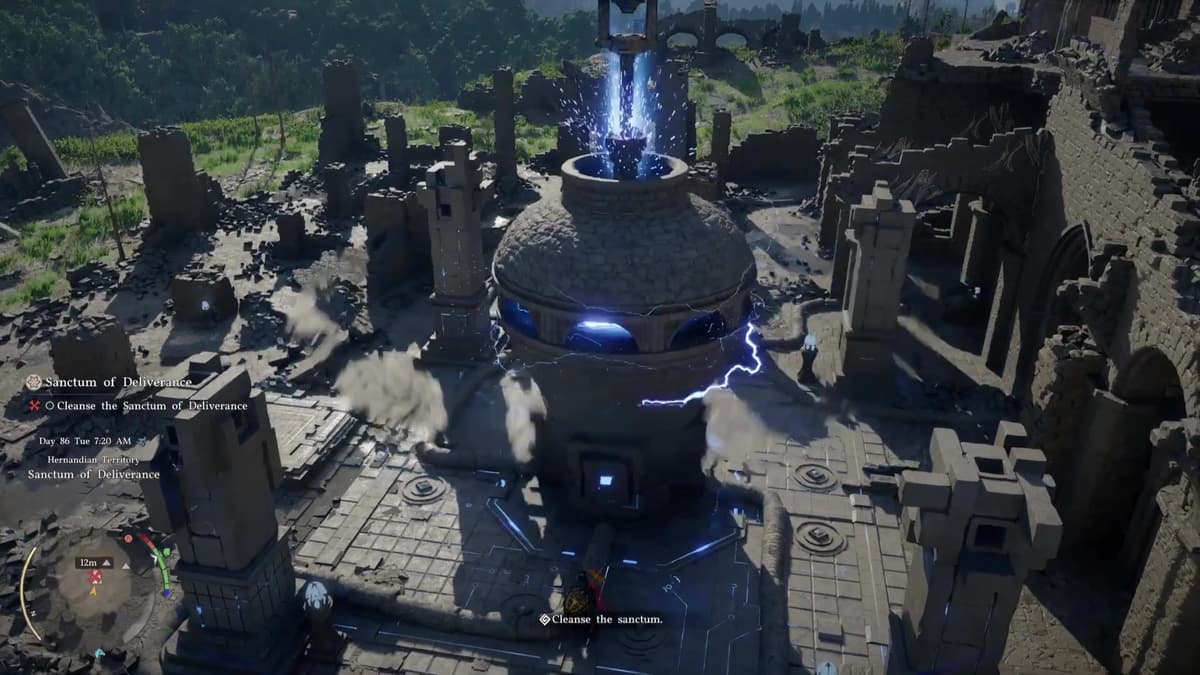
The Witch of Goodness questline – localised in some menus as the Witch of Kindness, and given by Bari – sends you to exactly four sanctums, not every shrine-shaped ruin in Pywel: Exaltation, Solace, Deliverance and Atonement. Exaltation and Solace are in Pailune; Deliverance and Atonement are in Hernand. Every one runs the same loop – clear the Antumbra Order, read the dead reactor, pull the missing cube and pillar pieces with Axiom Force, seat them with Force Palm. Solace is the outlier: it ends in a boss fight against Antumbra’s Staff. Finish all four and Bari hands you her Witch’s Token, one of the four you need to open the door to the hidden fifth witch, the White Crow.
Current as of version 1.13.01 (all-platform hotfix, 8 July 2026). The 1.13 cycle expanded Abyss access to Oongka and Damiane and added a large batch of armour, but nothing in it changed the sanctum names, the Chapter 5 gate, the Solace boss, or the four-token payoff.
Table of Contents (27)
The short version
- Quest: The Witch of Kindness, given by Bari (shown in some menus as the Witch of Goodness).
- Gate: the witch system opens around Chapter 5, after you meet Elowen, the Witch of Wisdom. Without an active witch questline a repaired sanctum will not play its completion cutscene.
- Four sanctums: Exaltation and Solace in Pailune; Deliverance and Atonement in Hernand.
- Loop: kill the Antumbra Order, read the reactor, pull cube and pillar pieces with Axiom Force, seat them with Force Palm, activate. Use the Kuku Pot for cores you cannot reach.
- Boss gate: the Sanctum of Solace ends with Antumbra’s Staff, which drops the Guidance of Dark Pursuit.
- Payoff: Bari’s Witch’s Token, plus per-sanctum gear and blueprints. Four tokens from four witches open the White Crow’s door.
- Don’t confuse it with the Sanctum of Benediction (Elowen’s line) or the Sanctum of Expiation (Areciel’s).
What unlocks these sanctums
Bari’s objective is later-story content. The witch system as a whole switches on around Chapter 5, when the witch chain begins with The Missing Seal and you meet Elowen, the Witch of Wisdom. That meeting matters for every witch, not only hers: until you have spoken to Elowen and have a sanctum objective assigned, walking up to a shrine and “fixing” it does nothing visible. The game simply will not play the purification cutscene.
So if a sanctum refuses to complete, the cause is almost always a story flag rather than a bugged puzzle. Advance the witch quests, then return.
- Meet Elowen first – she effectively enables the whole sanctum system.
- Find and speak to Bari so her four-sanctum objective is assigned.
- Axiom Force grabs and moves pieces – hold
L3on controller,Tabon PC. - Force Palm (
R3/ right stick / mouse wheel) seats them. Dropping a piece into place does not count. - Expect real combat in every sanctum before the repair phase.
Where all four Witch of Goodness sanctums are
Bari’s markers appear on the map once her objective is active, but the descriptions below save you the sweep. Look for a shrine complex with a dead central reactor, Antumbra Order enemies, and obviously missing architecture.
| Sanctum | Region | Where to look |
|---|---|---|
| Exaltation | Pailune | Northern Pailune, near Silver Wolf Mountain |
| Solace | Pailune | South-east Pailune – east of Silver Wolf Mountain / east of the Wayward Woods. Contains the boss. |
| Deliverance | Hernand | Eastern Hernand, east of Stormtalon Ridge |
| Atonement | Hernand | West of Haunted Hill |
Two cleanup points. Do not fold the Sanctum of Benediction into this set – it belongs to Elowen, whose own sanctums are Temperance, Penitence, Benediction and Absolution. And the Sanctum of Expiation in Demeniss is Areciel’s, not Bari’s; if that is the one you are actually chasing, use our Sanctum of Expiation walkthrough instead.
Since Exaltation and Solace both sit in Pailune, it is worth staging out of the right region before you start – our guide on how to move camp to Pailune cuts the travel considerably.
The purification pattern every Bari sanctum uses
All four run the same logic. The game changes the room layout, the enemy pressure, and where the pieces hide – the job never changes.
1. Clear the cultists first
Do not carry pieces while enemies are alive. These rooms are built to interrupt you, and they are held by the Antumbra Order. Until that group is dead the repair phase is slower and far easier to botch – and Solace gates the puzzle behind a full boss fight.
2. Read what the reactor is missing
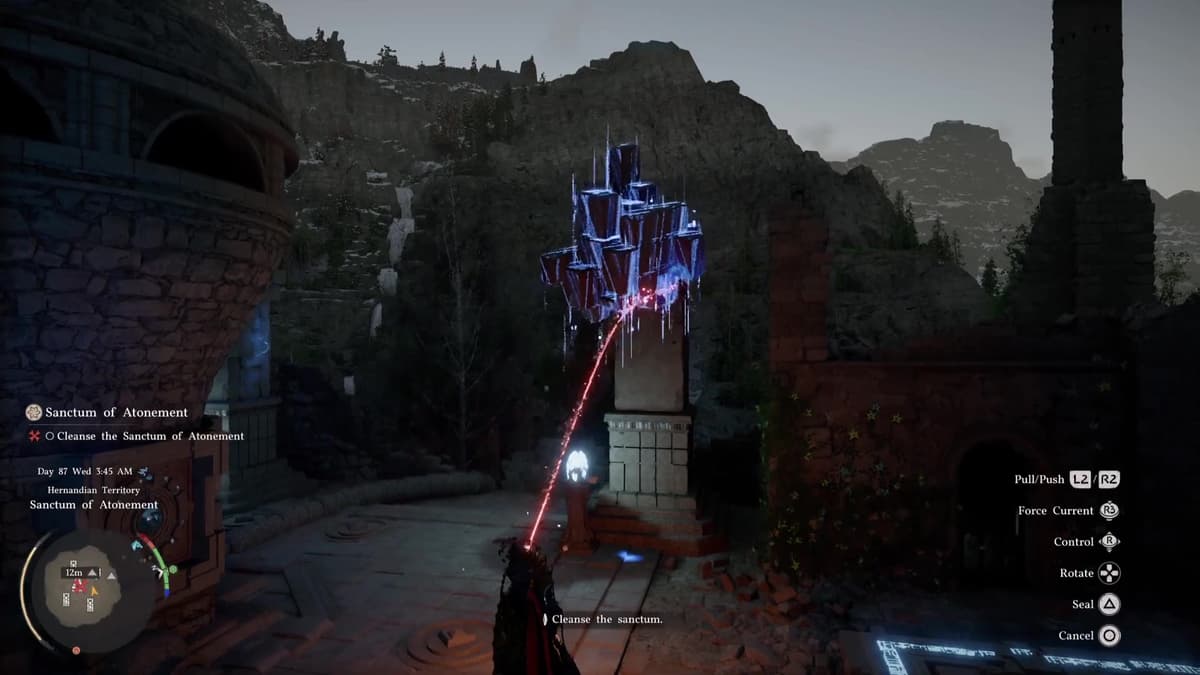
Walk to the central reactor and inspect it before you go searching. Most Bari sanctums are missing a floating cube-style power core, a broken pillar fragment, or both. That ten-second check tells you whether you are hunting one large part, one elevated part, or a full set – and stops you sweeping the whole ruin for a piece that does not exist.
3. Search vertically, and use the Kuku Pot
The biggest time sink in these shrines is searching only at ground level. Missing parts sit on broken ledges, float in open air, hide behind partial walls, or wait in upper side chambers. Pull them down with Axiom Force. When a power core is sealed somewhere you genuinely cannot reach, that is what the Kuku Pot is for: seal the core into the pot, then open the pot in your inventory and discard the core to drop it back into the world within reach.
If a side door is sealed, look for environmental triggers before assuming a bug – several layouts want you to light stone lanterns or torches to open the path to the final piece.
4. Seat the parts with Force Palm
Once the components are back at the centre, lock each part into the mechanism with Force Palm. For a piece that belongs on top of a pillar, jump first and use aerial Force Palm to drive it down. If the object looks aligned but the shrine will not wake, you have not landed the actual Force Palm hit – a correctly seated piece reads visibly different.
Sanctum-by-sanctum notes
Sanctum of Exaltation (Pailune, near Silver Wolf Mountain)
Treat Exaltation as your template. Clear the opening enemies, then stand at the centre and read the reactor before you move off. It teaches the standard loop cleanly: one obvious missing component, one less obvious elevated or side-room component, then the final Force Palm activation. If you stall here, the likely miss is a floating core above your natural eye line – sweep the outer ring and check broken balconies, roofline gaps and side platforms before assuming the piece is elsewhere.
Sanctum of Solace (Pailune, east of Silver Wolf Mountain)
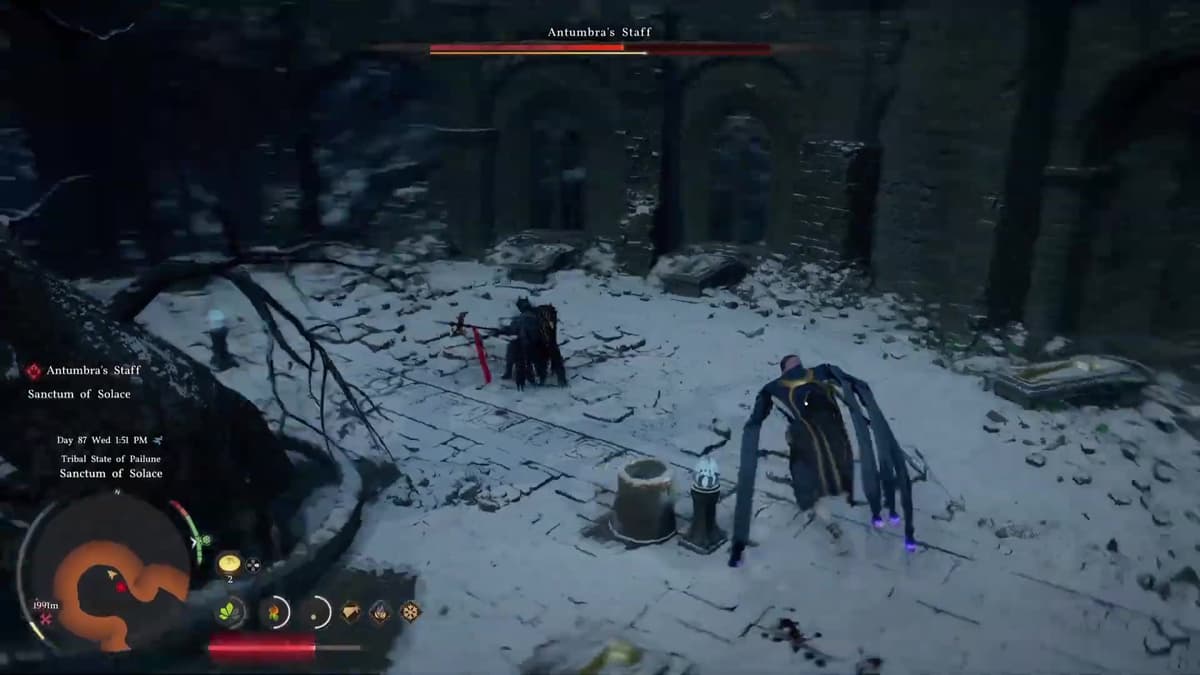
Solace is the outlier because it includes a named combat gate: the Antumbra’s Staff boss. Win that fight and fully clear the room before you touch the puzzle – leftover enemies knock you off alignment and interrupt the Force Palm that seats the parts. Defeating Antumbra’s Staff rewards the Guidance of Dark Pursuit, a heavy two-handed weapon.
Once the arena is calm, do a full perimeter sweep. Boss rooms in puzzle spaces reliably hide a required component in a corner or upper lip that you skip past when you switch from combat brain to puzzle brain too quickly. After that, Solace returns to the normal Bari pattern. If you want that fight in context, our Nest of Valor boss guide covers the same stamina-and-parry rhythm on a tougher target.
Sanctum of Deliverance (Hernand, east of Stormtalon Ridge)
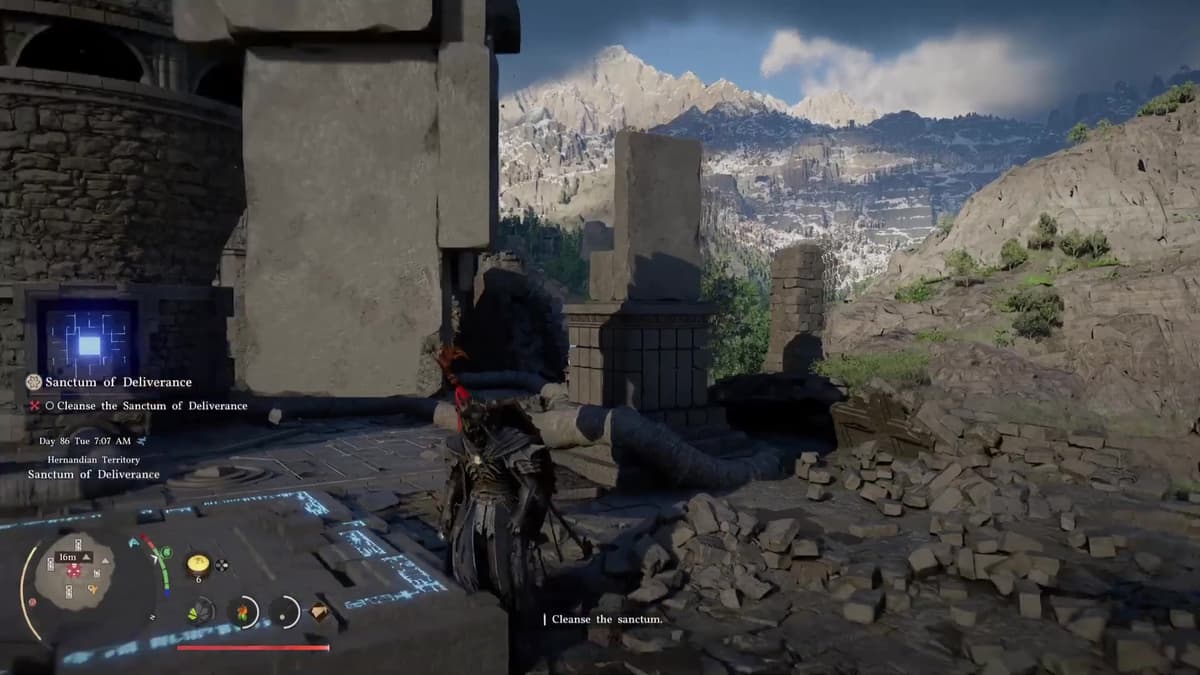
Deliverance is where vertical recovery matters most. If you bring one piece back and the reactor still looks incomplete, recheck the airspace above the central structure and any broken columns nearby – this layout likes to place a component where the line of sight is awkward unless you back away and look upward from the entry side.
This is also where the Kuku Pot earns its keep: if a core is wedged somewhere you cannot free it, pot it and re-drop it within reach. And if a chamber looks deliberately closed, hunt for lanterns or torch points rather than brute-forcing the geometry, because a sealed room usually holds the missing fragment.
Sanctum of Atonement (Hernand, west of Haunted Hill)
Atonement is the one where players think they have finished early. The reactor can look almost complete after two recovered pieces, but the last sanctums often hide the final part in a higher recess or behind a door you have not opened. If activation does nothing, stop repeating the input and sweep again for an uncollected fragment.
Use a methodical route – entry path, left outer wall, right outer wall, upper platform, then any torch-locked chamber – to avoid the backtracking loop where you circle the reactor and miss the same hidden angle five times running.
Common mistakes that slow this quest down
- Skipping Elowen. Without the Witch of Wisdom met and a witch objective active, a repaired sanctum will not complete.
- Confusing Benediction with Bari’s four. Benediction is Elowen’s and gives nothing toward Bari’s token.
- Searching only on the floor. Many required pieces float or sit on upper ledges.
- Ignoring environmental triggers. Unlit lanterns and torches keep side rooms sealed.
- Forcing the final activation early. If the mechanism will not wake, you are missing a component or the locking Force Palm.
- Starting the Solace puzzle before the boss is dead. Beat Antumbra’s Staff and mop up the adds first.
After you purify all four
Once Exaltation, Solace, Deliverance and Atonement are all purified, return to Bari to claim her Witch’s Token along with the sanctum gear and blueprints you banked on the way.
That token is one of four. Gather all four – one from each witch who hands out sanctum quests – and you can insert them at the sealed door that leads to the hidden fifth witch, the White Crow. Inserting the four tokens opens the door; walk in and speak to her to close out the witch content. Each sanctum has to be fully activated, not repaired partway. If your journal still shows the objective incomplete, the usual culprit is one shrine where every component was placed but the final mechanism was never triggered.
FAQ
How many Witch of Goodness sanctums are there?
Four: Exaltation and Solace in Pailune, Deliverance and Atonement in Hernand. Other sanctums you find in the world belong to different witches.
Why won’t my sanctum complete after I solved it?
Almost always a missing story flag. The witch system needs Chapter 5 progress and a meeting with Elowen; without an active witch objective the completion cutscene will not fire even on a correctly repaired shrine.
What does the Sanctum of Solace boss drop?
Antumbra’s Staff drops the Guidance of Dark Pursuit, a two-handed weapon.
What do the four Witch’s Tokens unlock?
They open the sealed door to the fifth, hidden witch – the White Crow. You need one token from each of the four witches who give sanctum quests, so Bari’s four sanctums are one quarter of the job.
Practical takeaway
Push to Chapter 5, meet Elowen, then take Bari’s objective. Do the two Pailune sanctums together from a Pailune camp, saving Solace for when you are ready for the Antumbra’s Staff fight, then cross to Hernand for Deliverance and Atonement. In every room the answer is the same: clear enemies, read the reactor, look up, light what opens, pull the pieces with Axiom Force, and lock them in with Force Palm. Four purifications, one Witch’s Token, one quarter of the road to the White Crow. More walkthroughs for the game are collected on our Crimson Desert hub.
FinalBoss // Gear
Level up your setup
01Top-rated gaming headsetson Amazon→02High-refresh gaming monitorson Amazon→03Gaming chairson Amazon→04Discounted game keyson Kinguin→
Affiliate links · As an Amazon Associate, FinalBoss earns from qualifying purchases.
Want to Level Up Your Gaming?
Get access to exclusive strategies, hidden tips, and pro-level insights that we don't share publicly.
Ultimate Guide Strategy Guide + Weekly Pro Tips