
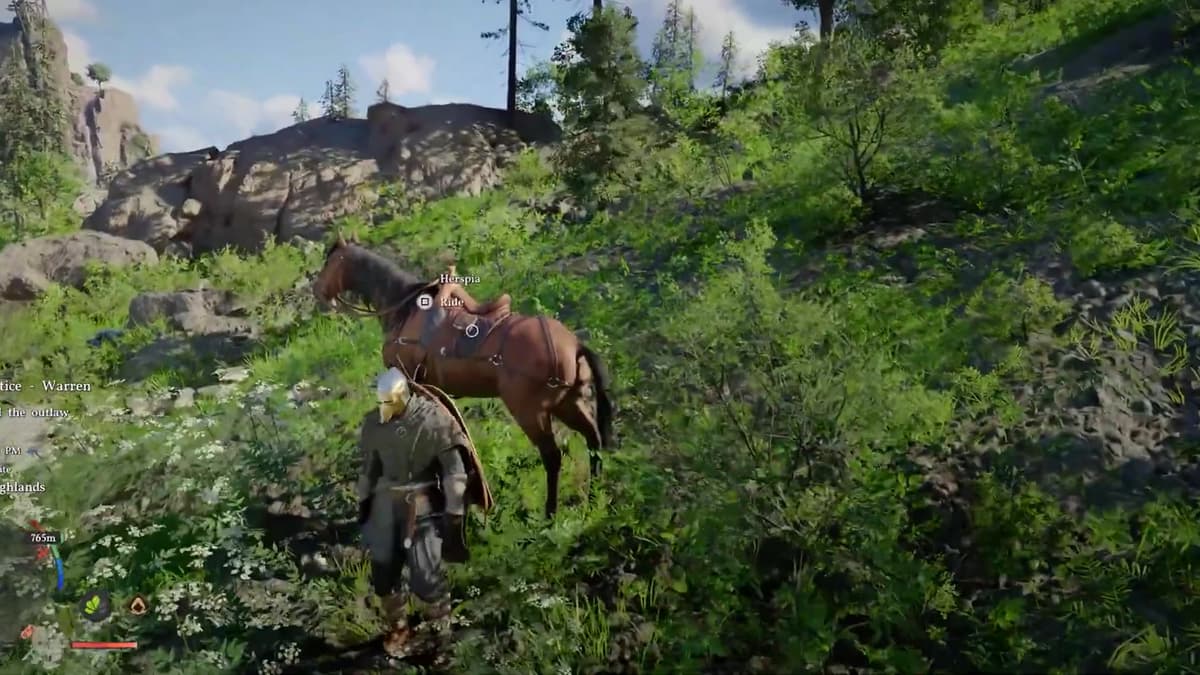
Your horse in Crimson Desert takes real damage from falls and rough terrain, and once it stops galloping properly, riding it further just wastes time. The fastest fix is a stable: talk to the stablemaster and use the heal option. Healing items and the Healing Force Palm skill cover you in the field when a stable is out of reach.
Table of Contents (16)
The short version
- At a stable: talk to the stablemaster and choose Retrieve and Heal Horse. This summons your mount and fully restores it for a small Copper or Silver fee (effectively free very early on).
- In the field (items): feed your horse Hay for a moderate heal or Horse Tonic to max its health. Sugar Cubes and Sugar Beet also restore health.
- In the field (skill): the Healing Force Palm — an upgrade to Force Palm unlocked with an Abyss Artifact — heals your mount directly, no stable or item needed.
- Stables dot Pywel. Merton runs the Hernand Stable, just outside the western city walls.
- Horse Stimulant restores stamina, not health — don’t confuse it with a heal item.
How to heal your horse at a stable
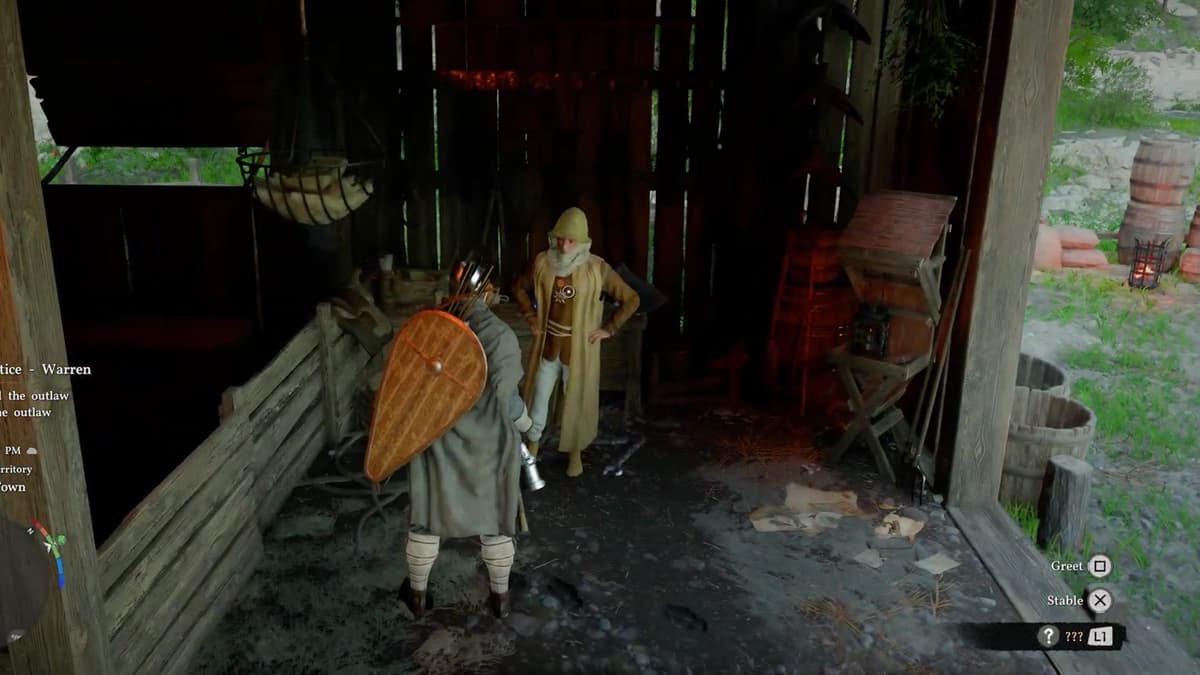
The stable is your primary repair point. Open the map, head to any stable, and find the stablemaster. Talk to him and pick the Retrieve and Heal Horse option — the same menu where you summon or swap mounts. That single action calls your horse back and brings it to full health, clearing the damage from falls. It costs a few Copper or Silver Coins depending on how badly hurt the mount is, though the fee is trivial (and effectively free in the opening hours).
- Open your map and travel to the nearest stable.
- Speak to the stablemaster — Merton runs the Hernand Stable, just outside the western city walls, and is one of the earliest you’ll deal with.
- Choose Retrieve and Heal Horse (the exact wording shifts slightly by language and build).
- Pay the small coin fee, mount up, and the horse moves and gallops normally again.
Stables are spread across Pywel, so you’re rarely far from one — there are roughly eight in total, with stablemasters such as Merton at Hernand, Oswin at the Calphade Stable, Levald in Demeniss, and Faisal and Sora out in the Crimson Desert region. The menu wording changes by language, but healing is always the stablemaster’s service, sitting next to summon and mount-swap.
How to tell your horse needs treatment
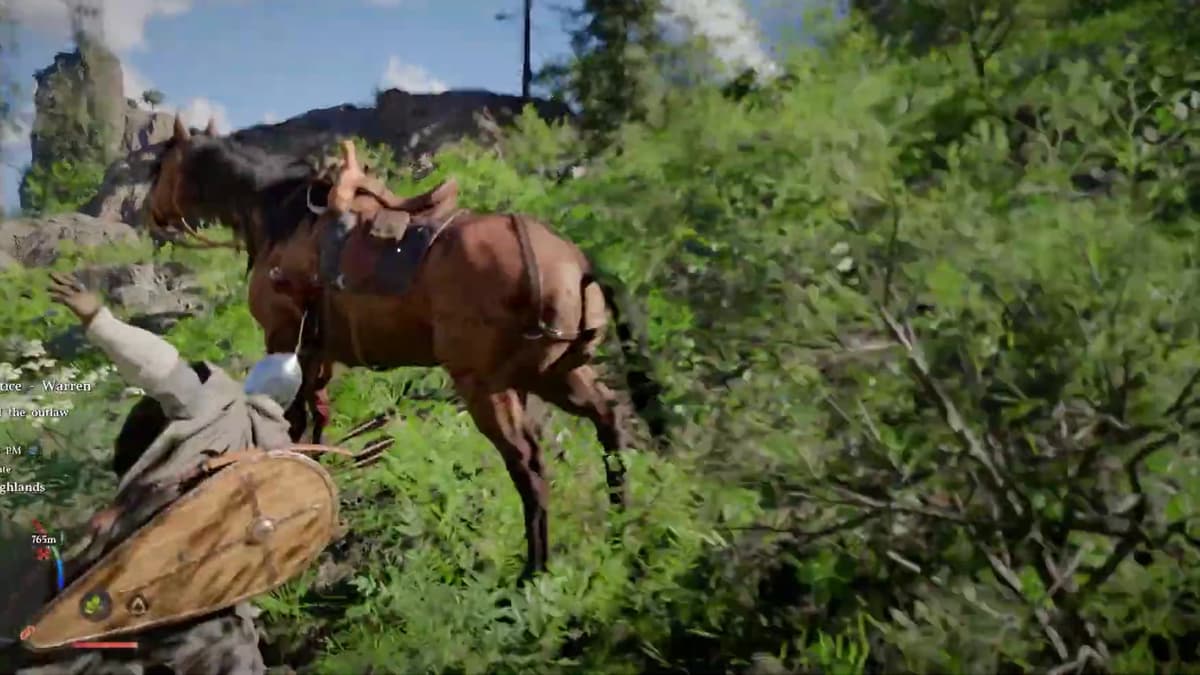
Horse damage in Crimson Desert is a traversal penalty, not a hidden stat you can ignore. After a heavy fall, a steep descent, or a bad landing, the mount slows down, loses its sprint, and feels sluggish to ride — you may even see it struggle to stand. That’s your signal to heal it. One caveat: if the horse simply runs out of puff during a long sprint, that’s stamina, not injury — let it catch its breath or use a stamina item rather than a heal.
Healing items: the field fix when a stable is too far
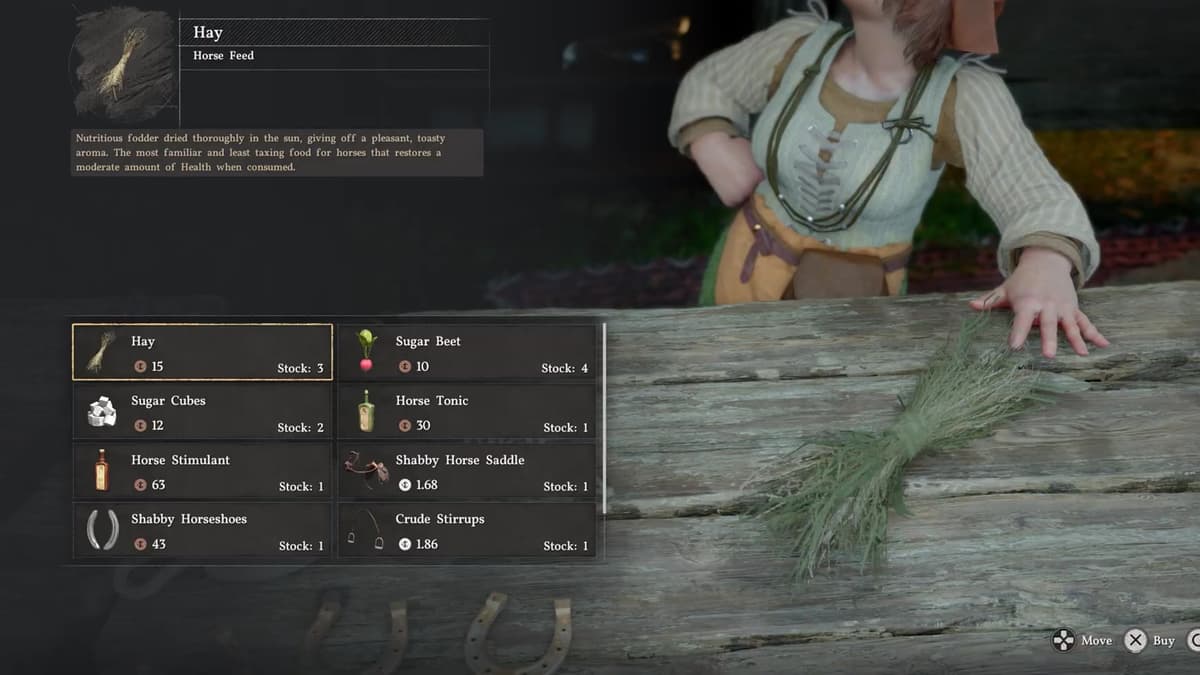
You don’t always have to reach a stable. Crimson Desert has consumables — sold at any saddlery — that heal your mount directly, so keep a few on hand for long expeditions:
- Hay — restores a moderate amount of the horse’s health. The reliable everyday top-up.
- Horse Tonic — pushes the horse’s health to the maximum. Save it for when the mount is badly hurt.
- Sugar Cubes and Sugar Beet — restore smaller amounts of health and make handy quick feeds.
To use them, mount up (or summon the horse), open your inventory, select the food, and hold the Use button to feed it. One thing to get right: Horse Stimulant boosts stamina, not health. If your horse is injured rather than just winded, reach for Hay or Horse Tonic instead.
Heal in the field with Healing Force Palm
There is a hands-on field heal, despite older guides claiming otherwise. Healing Force Palm is an upgrade to the standard Force Palm skill: open the Skills menu, find the Force Palm node, and unlock the healing variant by spending an Abyss Artifact. Once you have it, you can patch up your mount anywhere — no stable, no consumable.
- Unlock Healing Force Palm in the Skills menu (it costs an Abyss Artifact).
- Charge Force Palm, then switch to the healing variant.
- Aim at your horse and release. A badly hurt mount may need two casts to top off.
Use your camp stable to skip the town trips
You don’t have to ride back to a town stable forever. Your camp comes with its own stable — once you’ve unlocked and settled the Pailune camp, the stablemaster and horse-care service sit right at your base, west of the main gate. Healing and managing your mounts becomes a local hub function instead of a city errand, which cuts a lot of downtime out of long play sessions.
If you spend a lot of time in the field, prioritise it. The convenience compounds: every fall no longer means a trip back to civilization, just a stop at camp.
Don’t confuse healing with the other stable services
A stable does more than heal. It’s easy to open the wrong menu, see only gear options, and assume healing is missing. Keep the functions separate:
- Healing: the Retrieve and Heal Horse option restores the mount.
- Gear: saddles, horseshoes, and stirrups are bought and equipped through the saddlery menu.
- Mount handling: summoning and swapping which horse is active.
If you only see equipment options, you’re in the saddlery — back out and select the heal option from the stablemaster instead. Gear is useful, but it does not repair a damaged mount.
Common mistakes that slow you down
- Riding an injured horse anyway. Once mobility drops, you’re slower than if you’d stopped to heal. Fix it at the next stable, feed it Hay, or use Healing Force Palm.
- Using Horse Stimulant to heal. It restores stamina, not health. Use Hay or Horse Tonic for damage.
- Assuming there’s no field heal. There is — the Healing Force Palm skill heals your mount anywhere once it’s unlocked.
- Talking to the wrong NPC. A merchant selling horse gear is not the stablemaster who heals. Find the stablemaster (Merton at Hernand early on).
- Confusing stamina with injury. A horse that’s just winded needs rest or a stamina item, not a heal.
Prevent the damage in the first place
Horse injuries come almost entirely from risky traversal, so route choice is real mount management:
- Don’t take vertical shortcuts unless the slope is clearly safe.
- Slow down before blind ledges and rock shelves.
- If the terrain forces a hard drop, dismount and descend on foot.
- After a heavy impact, test the horse before committing to a long ride — feed it Hay if it feels off.
Practical takeaway
Heal at a stable with Retrieve and Heal Horse as your default — Merton at the Hernand Stable is easy to reach, and stables dot Pywel. Carry Hay for top-ups and Horse Tonic for emergencies, lean on Healing Force Palm once it’s unlocked, and use your Pailune camp stable to skip the town trips entirely so you’re never stranded with a crippled mount. Once you’re managing mounts well, the rest of your companion roster is worth the same attention — see how to get the Baby Wyvern and how to get the Sigil of Valor for pet combat.
FinalBoss // Gear
Level up your setup
01Top-rated gaming headsetson Amazon→02High-refresh gaming monitorson Amazon→03Gaming chairson Amazon→04Discounted game keyson Kinguin→Affiliate links · As an Amazon Associate, FinalBoss earns from qualifying purchases.
Want to Level Up Your Gaming?
Get access to exclusive strategies, hidden tips, and pro-level insights that we don't share publicly.
Ultimate Guide Strategy Guide + Weekly Pro Tips